Blog
Vigorus Blog: Ingredient Reads for Careful Buyers
Quick answer
The Vigorus blog has six new and featured posts, with three more added on October 30, 2026. One compares citrulline study doses of 3 to 9 grams with the 570 mg blend. One checks the 20 mg niacin and 11 mg zinc against daily limits. One reviews the small trials on saffron and maca. Each post cites its sources.
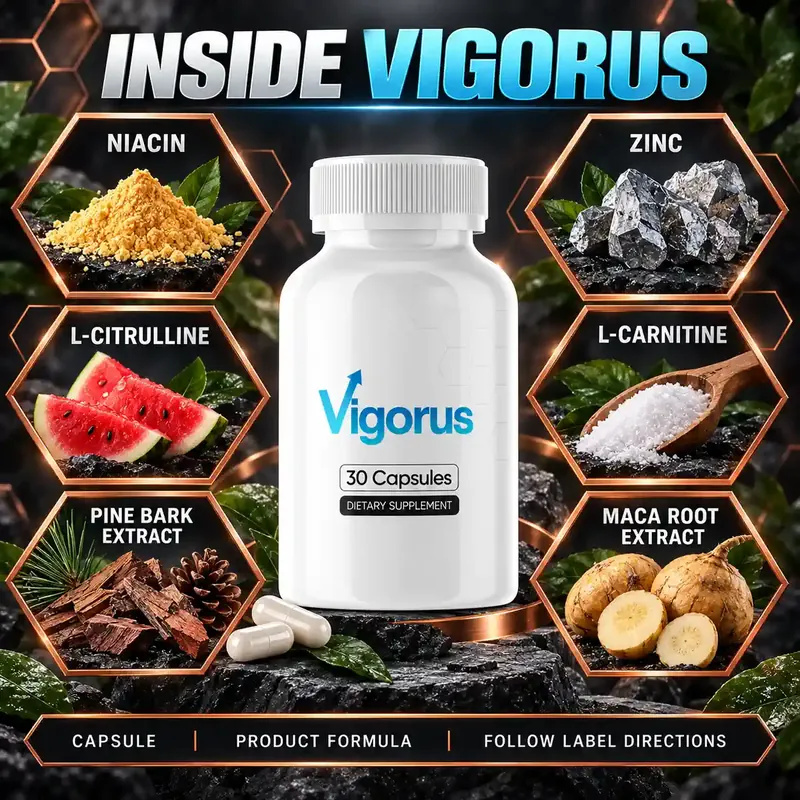
Which Vigorus blog posts can you read today?
Each post takes one ingredient question and answers it with numbers. Start with the one that matches what you want to check.
Vigorus Customer Service Number and Contacts
The order line for tracking, changes and refunds, the sales email, the returns address and which contact to use for each problem.
Read more →Vigorus vs L-Citrulline Powder: Which Fits You?
One capsule with eight ingredients in a 570 mg blend, or one ingredient at the 3 to 9 g studied doses. A side-by-side look at dose, routine and safety.
Read more →Vigorus for Men Over 40: What to Check First
No upper age limit on the label, but medicine checks matter more after 40. The doses, the safety checks and a fair 60-day test plan.
Read more →Vigorus Offer: What Each Pack Includes
The Vigorus offer in plain numbers: three packs, bottle prices, capsule counts, the 60-day money-back guarantee, and the details the site does not publish.
Read more →Vigorus Discount: Pack Savings by the Numbers
The Vigorus discount shown as plain arithmetic: how much less each bottle costs in the 3 and 6 bottle packs, and why a code is not part of it.
Read more →Vigorus 6 Bottles: 180 Capsules at $1.63 a Day
Vigorus 6 bottles for $294: the cost per bottle and per day, the 60-day guarantee fit, the four bottles left after day 60 and questions to ask first.
Read more →L-citrulline explained: study doses vs. a 570 mg blend
Citrulline trials used about 3 to 9 grams a day. This post walks through what those trials measured and why a shared 570 mg blend cannot match them.
Read more →Zinc and niacin for men: the two amounts you can read
The only label-verified amounts in the capsule are 20 mg niacin and 11 mg zinc. See how they compare with daily needs, upper limits and your other supplements.
Read more →Saffron and maca: what the evidence really covers
Two plant extracts with big reputations and small trials. This post sorts the research into what was tested, on whom, and what remains open.
Read more →Why do the blend numbers matter so much in these posts?
Because four of the six figures a buyer wants are hidden. The label gives one total for the blend and nothing for its parts.
- 570 mgBlend total per capsule
- 6Ingredients sharing it
- 0Individual amounts printed
- 3 gSmallest citrulline dose in the studies
Even if the whole blend were citrulline, it would reach less than a fifth of the lowest study dose. It is not all citrulline, so the real share is smaller still. Each post keeps this gap in view instead of hiding it.
How can you check a post against your own bottle?
The posts quote the label, but your bottle is the final word. Four quick checks take about two minutes.
Find the Supplement Facts panel
It is on the side of the bottle, next to the suggested use and caution text.
Match the two printed amounts
Look for Vitamin B3 (as niacin) 20 mg and Zinc (as zinc oxide) 11 mg.
Read the blend line
It should show 570 mg and list the six ingredients by name, with no amounts beside them.
Note the lot number
Compare it with the reference VIG-26/TH-4172. It is a matching label, not a lab result.
How does each post's label amount compare with the research?
This table sums up the core comparison in each post. The right column names the main source.
| Post topic | Amount in one capsule | Research or reference amount | Main source |
|---|---|---|---|
| L-citrulline | Part of 570 mg, exact amount not published | About 3 to 9 g a day in studies | NIH ODS (fact sheet) |
| Niacin | 20 mg (125% DV) | Upper limit 35 mg; flushing often at 30 to 50 mg | NIH ODS (fact sheet) |
| Zinc | 11 mg (100% DV) | RDA 11 mg for men; upper limit 40 mg | NIH ODS (fact sheet) |
| Maca | Part of 570 mg, exact amount not published | Trials too few and small for firm answers | Shin et al. (review) |
| Saffron | Part of 570 mg, exact amount not published | Small trials only | No U.S. government fact sheet |
How is a Vigorus blog post put together?
Every post goes through the same five steps before it is published. The steps keep label facts and research facts apart.
Copy the label line
The writer starts from the Supplement Facts panel and records the amount exactly as printed, or notes that it is not published.
Find the research dose
Study amounts come from NIH fact sheets, systematic reviews or controlled trials, never from marketing pages.
Put the two side by side
A table or plain sentence shows the gap, if any, between the capsule and the studies.
Quote claims as claims
Anything the sales page says is marked as the seller's words and kept out of the conclusions.
Check the wording
Short sentences, no disease claims, no promised timelines, and every source listed at the end.
Where can you read about the other three blend ingredients?
The blend holds six ingredients, and three have their own posts so far. The other three are covered on the ingredients page for now.
Which order should a first-time reader follow?
If you plan to read all three posts, this order builds from simple to complex.
Zinc and niacin first
These are the only two amounts printed on the label, so they are the easiest to judge.
Citrulline second
This post explains why a proprietary blend makes dose comparisons hard.
Saffron and maca last
With the dose problem in mind, the thin evidence on these two makes more sense.
Then open the Supplement Facts page and compare what you learned with the bottle.
What language will you never see on this blog?
The posts avoid wording that suggests more certainty than the research gives. Here is what that rules out, and what replaces it.
Pros
- "The sales page says" before any product claim
- "Not published" for missing amounts
- Named sources with links
- Plain ranges such as 3 to 9 grams
Cons
- Promises of results or dates
- Claims to treat or cure any condition
- Invented reviews, experts or studies
- Words like "miracle" or "proven"
How do you know a post is current?
Each post shows a last-updated date under its title. This index was last checked on October 30, 2026.
Posts are revised when the label changes, when a cited source updates, or when a reader reports an error. The date moves only when the content does.
Where should you go after the blog if you are ready to buy?
The posts stop at the science. These three pages pick up the money questions a reader usually has next.
Compare the three packs
Totals of $158, $207 and $294, with the cost per day for each.
Read more →Check the refund window
Sixty days from purchase, and how each pack length lines up with it.
Read more →Order through the right channel
Why the authorized order page matters for a men's supplement.
Read more →Should a blog post replace advice from your doctor?
No. The posts explain ingredients; they cannot weigh your health history. Citrulline and pine bark both touch circulation, so anyone on blood-pressure, blood-thinning or nitrate medicine should show the label to a clinician before starting.
For the full list of cautions, read the side effects page.
Questions about the Vigorus blog
How many posts are on the blog?
Three right now: citrulline, zinc and niacin, and saffron and maca. New posts are added to this index when they go live.
Why is there no post on carnitine, pine bark or grape skin yet?
Those three are covered on the ingredients page. A separate post will follow only if there is enough solid research to fill one honestly.
Do the posts say whether the product works?
No. They compare label amounts with research amounts. No study has tested the finished capsule, so the posts do not claim a result.
Who writes the posts?
The Vigorus Editorial Team, the same team behind the rest of the site. No outside expert is quoted, because none has reviewed this product for us.
How do I request a post on a new topic?
Yes. Send it to the website inbox. Topics tied to a label ingredient or a common buyer question get priority.
Are the posts sponsored?
Thevigorus earns money when you buy through this site, and the posts link to the order page. That is why every post sticks to label facts and cited sources.
References
- NIH Office of Dietary Supplements (accessed 2026). Carnitine: Fact Sheet for Health Professionals.
- NIH Office of Dietary Supplements (accessed 2026). Dietary Supplements for Exercise and Athletic Performance.
- NIH Office of Dietary Supplements (accessed 2026). Niacin: Fact Sheet for Health Professionals.
- NIH Office of Dietary Supplements (accessed 2026). Zinc: Fact Sheet for Health Professionals.
- Shin BC, Lee MS, Yang EJ, Lim HS, Ernst E (2010). Maca (L. meyenii) for improving sexual function: a systematic review. BMC Complementary and Alternative Medicine 10:44.
- Weichmann F, Rohdewald P (2024). Pycnogenol French maritime pine bark extract in randomized, double-blind, placebo-controlled human clinical studies. Frontiers in Nutrition.
Ready when you are
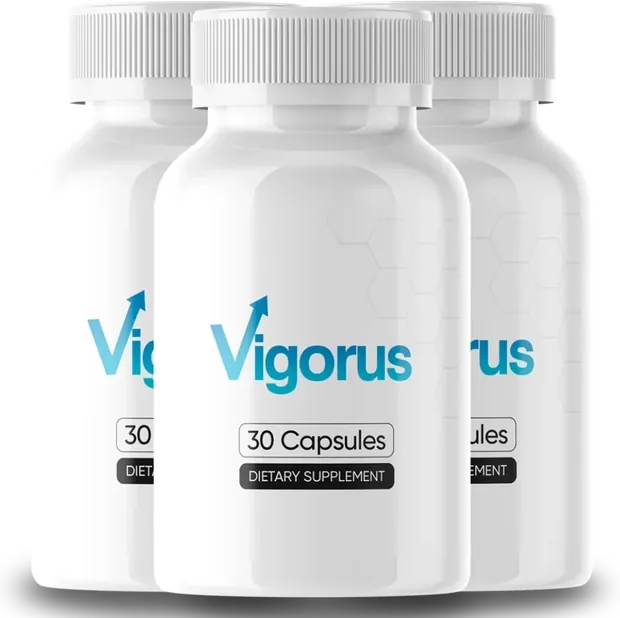
Order Vigorus from the authorized outlet
$49 to $79 a bottle, 30 capsules each. Every order has a 60-day money-back guarantee. Questions first? The Vigorus FAQ answers the common ones.

Keep reading
Vigorus Ingredients
All eight label lines in one capsule, with the amounts you can check and the ones you cannot.
Read →LabelVigorus Supplement Facts
The facts box rebuilt from the bottle, plus the warnings, storage and contact lines around it.
Read →Start hereVigorus Guides
Every Vigorus page sorted by the question it answers, with a suggested reading route.
Read →